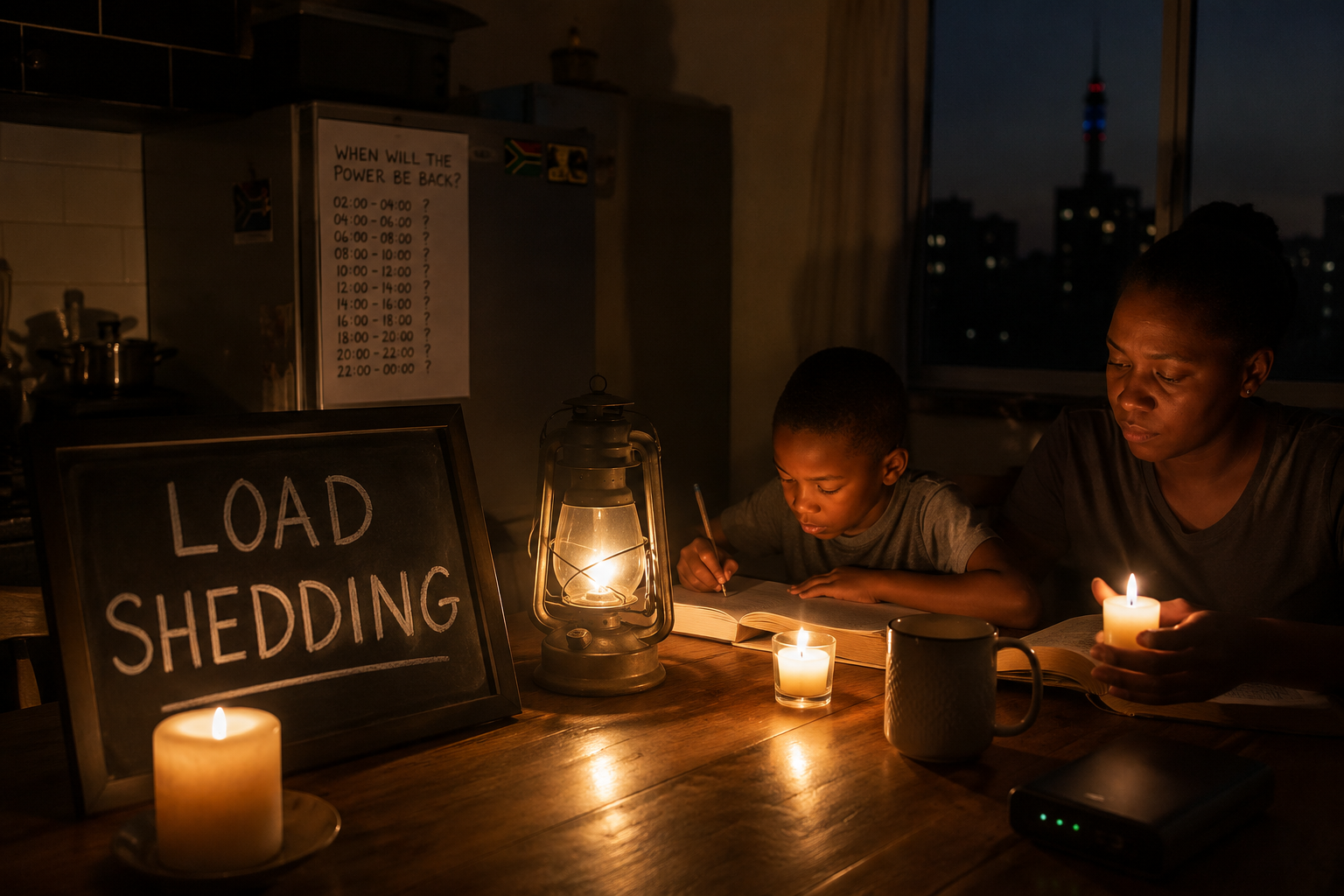
Load Shedding Is Gone — But Power Problems Are Still Hurting Workers and Drivers in 2026
South Africa reached a milestone that felt almost unimaginable just two years ago. On 12 March 2026, the country recorded 300 consecutive days without national load shedding — and the lights have stayed on ever since. Eskom has officially projected no load shedding through August 2026, and the power system is described as more stable than it has been in nearly a decade.
For millions of South Africans who spent years planning their lives around rotating blackouts, this is genuinely good news. But for many workers, commuters, and drivers — particularly in Gauteng — the power problems have not fully gone away. Load reduction is still cutting electricity to thousands of households and businesses almost every day, and the economic damage from years of outages continues to shape the job market in ways that are still being felt in 2026.
What Changed — And What Hasn't
The improvement in South Africa's electricity situation is real and significant. Eskom's Energy Availability Factor — the measure of how much of its installed capacity is actually generating power — climbed to nearly 70% by late 2025, up from around 57% a year earlier. Key power units including Koeberg Unit 1 and Medupi Unit 4 returned to service ahead of schedule. Unplanned outages dropped by more than 50% year on year. The Generation Recovery Plan, once a crisis response strategy, has become standard operating procedure.
However, Eskom has been clear that the risk has not disappeared entirely. If unplanned breakdowns exceed 16,000 megawatts during the 2026 winter peak demand period — which runs from mid-May through mid-August — load shedding could return at stages 2 to 6. Winter is always the most vulnerable period for the grid, and South Africans who have lived through the past few years are understandably cautious about celebrating too early.
Load Reduction Is Still Hitting Gauteng Workers Hard
While the rest of the country has largely moved on from daily blackouts, many communities in Gauteng are still losing power for hours at a time through Eskom's ongoing load reduction programme. Load reduction is different from load shedding in technical terms — it targets specific overloaded feeders and areas with high levels of illegal connections rather than cutting power nationally — but for the families and workers affected, the impact feels identical.
Dead traffic lights, no power at work, interrupted internet connections, and food spoilage are still daily realities for thousands of Gauteng residents. For workers who run home-based businesses, do remote or freelance work, or depend on charged devices and connectivity to earn an income, these outages directly cut into earnings.
Eskom says progress is being made. Over 340,000 customers have already been removed from load reduction schedules, and smart meter installations are underway across affected feeders. The utility expects 60% of affected areas to be cleared by September 2026 and the rest by 2027. But for those still in the affected areas, relief is still months away.
The Lasting Damage to Jobs and Small Businesses
Even with load shedding suspended, the damage from years of rolling blackouts continues to affect the job market. Research on the impact of power outages on South Africa's labour market found that load shedding was directly associated with lower employment rates, reduced working hours, and lower monthly earnings. Manufacturing was the hardest-hit sector, with severe outages linked to nearly 17% lower employment in the industry — far above the average across all sectors.
Small and medium businesses — the backbone of employment in South Africa — were particularly vulnerable. Many could not afford generators or alternative power solutions and were forced to cut staff, reduce hours, or close entirely during the worst load shedding years of 2022 and 2023. Some of those businesses never fully recovered, and the jobs they once provided have not all come back.
What It Means for Drivers and Delivery Workers
For drivers — whether taxi operators, delivery riders, or truck drivers — load shedding and load reduction create specific and serious hazards. Dead traffic lights at intersections are one of the most dangerous consequences of power outages, dramatically increasing the risk of accidents. During the worst of the load shedding era, intersections across Johannesburg, Pretoria, and Durban became collision hotspots when robots went dark during peak hours.
Delivery workers who depend on charged phones and working navigation apps are also affected when outages hit without warning. Fuel stations with no power cannot pump fuel, disrupting logistics operations. Cold storage for food deliveries is compromised when refrigeration cuts out. All of these ripple effects reduce productivity, extend delivery times, and in some cases make it impossible to complete a shift.
Looking Ahead
The big picture for 2026 is genuinely more positive than it has been in years. The suspension of national load shedding has already allowed businesses to operate more consistently, reduced vehicle accident rates at major intersections, and improved the daily working conditions of millions of South Africans.
But the job market is still recovering from the damage done, load reduction remains a real issue in parts of Gauteng, and the risk of a return to load shedding this winter — while low — has not been officially ruled out. Workers and drivers should stay informed, check the Eskom app and load reduction schedules for their specific areas, and plan their working hours around potential outages where possible.
For the latest news affecting South African workers and job seekers, visit JoblySA.co.za.